The fly trap

Call butterflies look incredible on paper. Spend $300, make $1,200. That's 4 to 1.
Here's what the payoff diagram doesn't show you.
That $1,200 only exists at one exact price, on one exact day: expiry.
The fly has about 3% delta. An outright call has 40. A call spread has 15. The fly barely flinches when the stock moves.
Market rallies 5% in two weeks. Exactly what you predicted. Your fly? Up maybe $100 if you're lucky and vol gets crushed. The real payoff doesn't kick in until the last 3 days.
Meanwhile, the guy who bought a call spread for $600 is sitting on 100% profit. He had delta. His position actually responded to the move.
I trade flies. They're a legitimate structure. But you need to understand what you're actually buying: leverage to a very specific price at a very specific time. The P&L comes from vol declining and theta, not just from the rally itself.
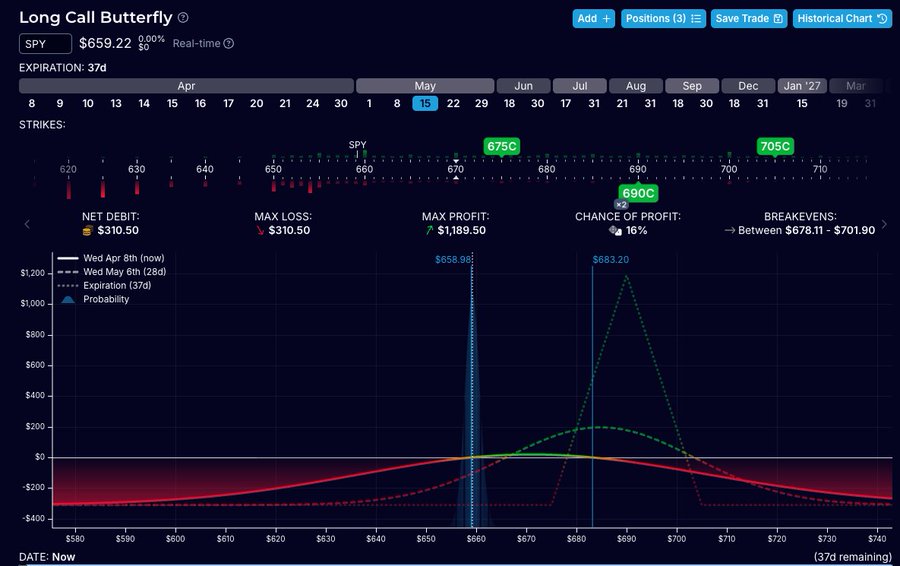
If you're high conviction on a directional move, the fly is the wrong tool. It has almost no delta to capture that move until very late in the trade.
Always check the Greeks before you fall for a payoff diagram. And ask yourself honestly: do you have the patience to wait until expiry for the money?


Imran
Disclaimer (Your Gains & Losses, Your Responsibility): This content from Options Insight LLC (“Options Insight”) is for educational purposes only and does not provide individual investment advice or recommendations, nor should it be considered an offer to buy or sell any security. All information is general and not tailored to your specific objectives, financial situation, or risk tolerance. Employees of Options Insight may hold positions in the assets discussed. While we use sources believed to be reliable, we are not responsible for errors, omissions, or losses resulting from reliance on this content. Always consult a licensed investment professional.
Liked this? Imran writes one every market day. Get them direct to your inbox.