The skew is one of the best early-warning systems

The volatility skew is one of the best early-warning systems in markets. It's also one of the least watched outside the options world.
Skew is a simple concept. It measures how much more people are paying for downside protection than upside. The useful moment is when it shifts hard, because that's when positioning is changing under the surface.
Two setups where the read is sharpest.
Setup one. The market is grinding higher, but put skew is getting aggressively bid. That means big players are quietly loading up on downside protection while everyone else looks relaxed. The chart looks fine. The surface is telling you a reversal is closer than it looks from the price alone.
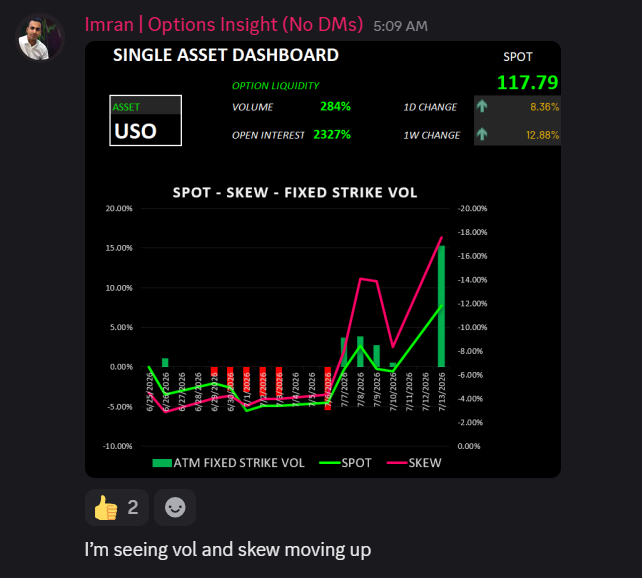
Setup two. The market is in the middle of a crash, and skew spikes to crazy levels. Puts trade miles above what the underlying is actually realising. That's usually peak panic. Everyone who wanted a hedge already has one and is paying over the odds. There are no sellers left. Fixed strike vol hits a plateau. That kind of extreme is often near the bottom.
Two very different reads. Same source.
For me, the surface tells you what positioning is really doing well before it shows up in price. Not foolproof. Nothing is. But it's one of the sharpest tells I know for reading whether the tape's conviction matches the positioning underneath.
The two setups above are how I use it in real time. Put skew getting bid on a rally is a "positioning tells you something the tape isn't saying yet" signal. Skew spiking to extremes in a crash is a "everyone's already positioned, no more sellers coming" signal.
If you can read those two signals, you have a genuine early-warning system that runs ahead of price on both sides.
Reading the skew in real time is one of the most under-taught skills in options.
Where could you start building the skills? The framework I built across 20 years on bank options desks is below.
The reason the skew works as an early-warning system is that it's harder to fake than volume or price.
Prices can move on retail noise. Volume can spike on headlines. Skew doesn't shift meaningfully unless real capital is repositioning. Hedge funds buying puts to protect a book, insurance flows rebalancing, banks laying off risk. The people trading big enough to move skew are the same people whose positioning matters most for the next leg.
That's why the shift matters more than the level. A high level of skew tells you the market has already priced in fear. A shift in skew tells you positioning is changing right now.
Watch the shift. That's the read.
If you want to skip the masterclass and jump straight into our course, the Options Insight Advantage, this is the link.
Remember: Price is the loudest signal. The skew is often the earliest.

Imran
Disclaimer (Your Gains & Losses, Your Responsibility): This content from Options Insight LLC (“Options Insight”) is for educational purposes only and does not provide individual investment advice or recommendations, nor should it be considered an offer to buy or sell any security. All information is general and not tailored to your specific objectives, financial situation, or risk tolerance. Employees of Options Insight may hold positions in the assets discussed. While we use sources believed to be reliable, we are not responsible for errors, omissions, or losses resulting from reliance on this content. Always consult a licensed investment professional.
Liked this? Imran writes one every market day. Get them direct to your inbox.